CaribLit
News, Information, Resources for Caribbean Publishing
  • Home
  • About
    • Member Directory
  • Directory
    • Directory Search
  • Blog
  • Book Club
  • Photos
  • Survey
  • Links
  • Contact

Working the Roots: Cuba’s Ocean Sur Press Mines Politics and Revolution for Publishing Profit

21/2/2013

 
Picture
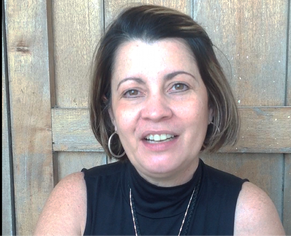
Yvonne Muñiz, Ocean Sur Press
From its tiny base in Cuba, Ocean Sur Press has generated an impressive catalogue of more than 300 titles in just seven years. A spin-off of the Australian publisher, Ocean Press, Ocean Sur publishes books on Cuban history and politics, including the writings of Che Gevara and Fidel Castro. The company now generates strong sales in Cuba, particularly to the large market of tourists and sells well throughout Latin America, the United Kingdom and the United States. It’s US distribution network now spans more than 2,000 bookstores. It has also been able to parlay its book rights into films including Motorcycle Diaries, the 2004 film directed by Walter Salles and Steven Soderbergh’s 2008 film, Che: The Argentine/Guerilla.

Ocean Sur’s catalogue also includes titles on Latin American thinking, politics and revolution, including books on Chile’s Pablo Neruda and Martinique’s Franz Fanon. The company also publishes books under its Open Memories category, which commemorates the lives of freedom fighters and leading thinkers around the world, such as Malcolm X, Martin Luther King, Helen Keller and Albert Einstein.

Ocean Sur’s Yvonne Muñiz, a former art critic with a background in Caribbean art, thinks there are strong opportunities for publishers from the English-speaking Caribbean to mine the politics and history of the region in similar ways.

“In the Caribbean, you have to work the roots,” says Muniz. “You have to start with the history. You have to go against the many myths that have been imposed on the Caribbean. You usually find information on the beauty of the Caribbean. But behind that there is a history that needs to be written and rewritten.

“We should go back to our first thinkers. The topic of race is very important in our culture. There are histories that have been put into silence. The world is not aware of the cultural richness of our countries in the Caribbean.”

Muñiz thinks that the rise in electronic readers and tablets give Caribbean publishers the opportunity to package new works on history, politics and culture in fresh and interesting ways.

“We live in a world of images,” she says, calling for publishers to integrate major texts with relevant photography and illustrations. “Vernacular architecture, ruins, paintings, traditions, cuisine --  all are attractive to other markets. Colour is important. Covers are important.”

Muñiz notes that maintaining an active, current website and supporting social media platforms is critical for Caribbean publishers who wish to reach the international audience. She also recommends generating a regular newsletter and sending Advance Information sheets to distributors for all new releases.

“Caribbean content sells,” says Muñiz. “Our countries are very much loved by people around the world. There are many niches that have not yet been exploited.”

Translation provided by Vladimir Dominguez. Learn more about Ocean Sur Press.

Spotlight on Fernwood Publishing: Canadian Publisher with Caribbean Interests

21/2/2013

 
Picture
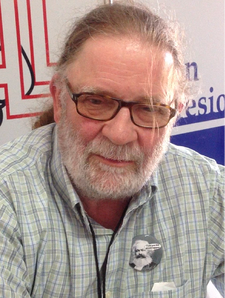
Errol Sharpe, Fernwood Publishing
Among the many publisher-to-publisher deals happening at the Havana Book Fair, Canada’s Fernwood Publishing was on hand to negotiate two way exchanges with Canadian publishers. When CaribLit caught up with Fernwood CEO, Errol Sharpe, he was in close discussions with Agencia Literatura – the agency responsible for negotiating Cuban rights sales and authors’ royalties. Fernwood is looking for Cuban books to publish in Canada as well as opportunities to get the books it has published about Cuba into the Cuban market. CaribLit asked Sharpe about the opportunities for Caribbean publishers to sell books in Canada.

 “Fernwood is one small company and one of very few publishing critical, and in some cases, revolutionary books,” says Sharpe. “The idea is to publish books that stimulate debate and discussion on critical social and political issues, like class and class analysis, criminology, development and international studies, race relations, social movements and politics.” The company also has a small fiction programme; all of the books deal with social issues.

Picture
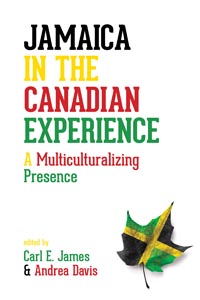
In 2012, Fernwood published Jamaica in the Canadian Experience, an edited volume of essays by Jamaicans living and working in Canada, released to commemorate the island’s 50th anniversary of independence. The book was well received in the Canadian market. While the company has not published many titles from or about the English-speaking Caribbean, Sharpe notes that there’s strong interest in Caribbean content in Canada, particularly at universities with Caribbean studies programmes. The company is open to exploring co-publishing arrangements with Caribbean publishers, particularly for titles related to critical analysis of Caribbean politics. For example, Sharpe is interested in publishing a book on ALBA – the Bolivarian Alliance for the Peoples of Our Americas, the trading bloc launched by the governments of Cuba and Venezuela in 2004 in response to the Free Trade Area of the Americas. 

Authors who wish to propose book ideas to Fernwood can make submissions directly on the Fernwood website. 

For Caribbean publishers trying to sell books in Canada, Sharpe says that distribution and gaining retail presence can be a challenge. He estimates that 75% of the Canadian retail trade is dominated by one bookstore chain, Chapters. “It can be quite difficult for small publishers to get in.” He notes that electronic books are gaining ground but market penetration is still quite low, especially in the academic market. 

For authors and publishers interested in breaking into the Canadian market, Sharpe recommends studying the market closely. “Get online and look at the Canadian publishers. See what they publish. Find a publisher that’s working with material similar to yours. Many Canadian publishers are interested in Caribbean fiction.”  Sharpe also recommends that interested authors follow each publishing house’s submissions guidelines closely. “Be sure to give the publisher exactly what they ask for. For example, if the publisher requests a book proposal, don’t send a manuscript.”

Picture
To learn more about Fernwood Publishing, visit fernwoodpublishing.ca.

A Carnival of Books

21/2/2013

 
Picture
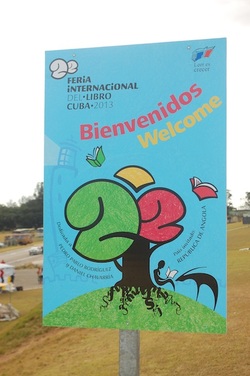
Passion meets prose at the Havana International Book Fair – the largest in the Caribbean

The numbers alone are staggering: 140+ exhibits; 100+ events per day; 400 foreign delegates from 40 countries; 11 days of book launches, readings and performances; 12 venues across the city, including the sprawling Cabaña Fortress – a massive 25-acre historic site that serves as the Fair’s hub; on average, more than 20,000 visitors per day.

And that’s just the warm-up. 

When the curtain comes down in Havana on February 24, 11 days of non-stop activity after its Valentine’s Day start, the Fair repeats its combination of book sales and supporting events on a tour through all 14 of Cuba’s provinces, culminating in Santiago de Cuba.

By the time the fair ends in Santiago de Cuba – after 30 days in total -- more than 140,000 books will have been sold and more than 1,000,000 Cubans will have come out for the event.

Picture
But the numbers don’t tell the whole story. The Havana Book Fair is a cultural phenomenon. Since its start in the 80s as a biennial book fair, it’s grown into a massive event – annual since 2000 – the largest on the Cuban calendar.

“Everybody [looks forward to] the book fair,” says Aida Bahr of the Instituto del Libro (Cuban Book Institute), the state agency responsible for coordinating the fair. “It’s the cultural event that gets to everyone, everywhere. Most of our books are launched at this time of year for the fair, so it’s a great opportunity to buy new books.

“It’s not just book launches and sales, but a very wide programme of activities: conferences, meetings of librarians and historians, literature and social science conferences. There are meetings with publishers to discuss important issues [as well as] meetings with foreign publishers.”

Every year the fair honours one country and two outstanding Cuban writers – a fiction writer and a social scientist.  The selections influence much of the programming. This year’s honoured country, Angola, brought a delegation of more than 100 writers, performers, academics and cultural representatives to the Fair, to showcase Angolan culture in all its forms and Cuban publishers released 18 new editions of Angolan books for the local market.

It’s the combination of new Cuban books, the opportunity to learn about other cultures and the sheer magnitude of the spectacle that draws the Cuban audience year after year for an event that feels more celebratory than cerebral. 
That’s what the Instituto del Libro and its partner planning agency the Camara del Libro (Chamber of Books) are banking on. (Yes, Cuba has a Chamber of Books, like a Chamber of Commerce; a state run agency to tend to the business of its books.  The Chamber runs logistics for the fair as well as a summer slate of book related activities during the summer holidays and manages Cuba’s participation in international book fairs.) 

“The mission of the Havana Book Fair is to give the people access to books,” explains Bahr. Jesus David Curbelo who coordinates the fair’s mammoth schedule of literary, academic and professional events notes that the mission isn’t necessarily to get people to buy books during the fair. “A lot of people come just to have fun… It’s part of our cultural tradition and [it has made] people very  interested in reading.”

The human and financial resources invested are signfificant -- the organizing committee has more than forty members and  with the staff of the Instituto del Libro and the Camara del Libro, the full team numbers into the hundreds. The budget for domestic expenses alone; i.e. salaries and things that do not have to be imported, run into the millions. But the fair isn’t expected to make a profit.  As with all books published in Cuba, the book fair itself is subsidized by the government, with the long term goal of promoting reading and strengthening Cuban culture. 

“The point of it is to make a cultural investment,” says Bahr. 

“It’s an investment in the people.”

Cuban Book Industry by the Numbers

21/2/2013

 
  • 172 publishing houses. Most are small, belong to a University or research centre and publish just a few titles every year. 
  • 30 major publishers:  14 belong to the Ministry of Culture: the rest belong to other ministries or NGOs. 
  • 7 publishing houses are run by the Instituto del Libro; each specializes in a different genre, including Arte y Literatura, devoted to publishing foreign literature. 
  • 2000+ books published per year collectively
  • One major book distributor: the National Book Distributor, belongs to the Instituto del Libro.
  • 300+ bookstores: at least one in each of the 169 municipalities. No matter how remote, each municipality has a bookstore; the larger ones have up to 15. 
  • 48 bookstores in Havana alone, selling primarily Cuban books. One chain, Ediciones Cubanas – caters to tourists and sells foreign titles.
Forward>>

    About the CaribLit Blog

    Commentary and insight on Caribbean publishing. Here you’ll find articles written by our action group members and other literary and publishing notables, as well as links to useful articles from other sources and coverage of literary and publishing events. We look forward to your comments.

    Archives

    February 2017
    September 2016
    May 2016
    January 2016
    December 2015
    November 2015
    September 2015
    March 2015
    February 2015
    January 2015
    December 2014
    July 2014
    June 2014
    May 2014
    April 2014
    March 2014
    February 2014
    January 2014
    December 2013
    November 2013
    October 2013
    September 2013
    August 2013
    July 2013
    May 2013
    April 2013
    March 2013
    February 2013

    Tags

    All
    Agents
    Book Fairs
    Book Festivals
    Book Policy
    Bookstores
    Canada
    Conferences
    Co Publishing
    Co-publishing
    Cuba
    Diaspora
    Distribution
    Ebooks
    Funding
    Havana Book Fair
    Jamaica
    Kingston
    Kingston Book Festival
    Latin America
    Marketing
    Prizes
    Publishers
    Rights
    Royalties
    Spanish
    Technology
    Tobago
    Translation
    Trinidad
    United Kingdom
    United States
    Writers

    RSS Feed

Twitter

Tweets by @CaribLit

Partners

© 2012 - 2013 CaribLit. All rights reserved.